From Dead Grass to Flourishing Meadow In 3 Years
User: kazuokev@hotmail.com
Vendor: None
Action: 3579 - Reduce or Replace Your Lawn
About three years ago I started reading about pollinator decline and, at the same time, was wondering what to do about a stretch of yard where grass didn't grow well. As a completely novice gardener, I had no idea what types of flowers were suited to my yard's particular situation. So I bought a pollinator flower mix from American Meadows, pulled weeds best I could and threw some seed over a couple of de-weeded spots and figured I'd go from there.
Here's the before shot from August 2022 where I had just a small vegetable garden with a tomato plant or two:

At the end of the first growing season (Sept 2023), I had some moderate success, with sunflower, black eyed susans and sulphur cosmos patches making an appearance:

Fast forward to this year, with now two additional years of knowledge and experimentation plus lots of yard time clearing dead grass, pulling new weeds, spreading additional seed and watering seedlings as they establish, my formerly neglected stretch of mostly dead grass is over a thousand square feet of flowering plants:

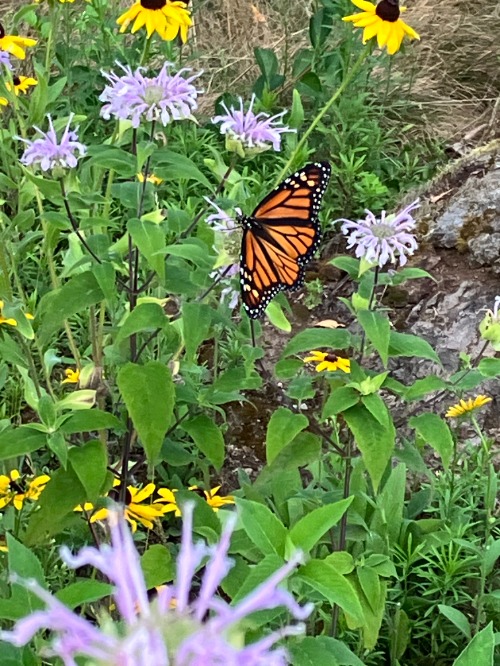
This picture is from late June after the black eyed susans popped. About 3 weeks prior to that, there was a long bloom of lanceleaf coreopsis that started in mid-late may. Further down the street you can see a hint of violet from the bee balm balm that was just starting to bloom, and in the foreground you can see one lonely bright orange butterfly milkweed establishing itself. Later in the season, the partridge pea, goldenrod, ironweed, aster, sunflower and cosmos will take the handoff from the black eyed susan and bee balm, ensuring flowers until frost. It's certainly a different look than a cleanly mowed lawn (you can have both!) but one that I think adds both visual and enviromnental benefit.
It was a lot of work on my part, so I'd be lying if I said that establishing a flower meadow is a low maintenance endeavor compared to just mowing that same stretch and calling it a day. My suggestion is to start small. I've had good success identifying a patch where grass grows poorly, cutting that patch as low as possible, covering that spot with cardboard or brown paper bags (or a leaf bag) and covering that with a bag or two of soil. That process kills the weeds and grass and establishes a new layer of fresh topsoil for the flower seed (start with a mix until you know what grows in your yard). Timing also matters, as many native plant seeds need a winter season to break down their seed shells, so read instructions to see whether your seeds would be better planted in the fall versus spring. With regular mainenance and watering during growing season, you'll likely have something from your mix start growing by May or June. The bees, butterflies and bugs will thank you!
- All Testimonials